NezHost
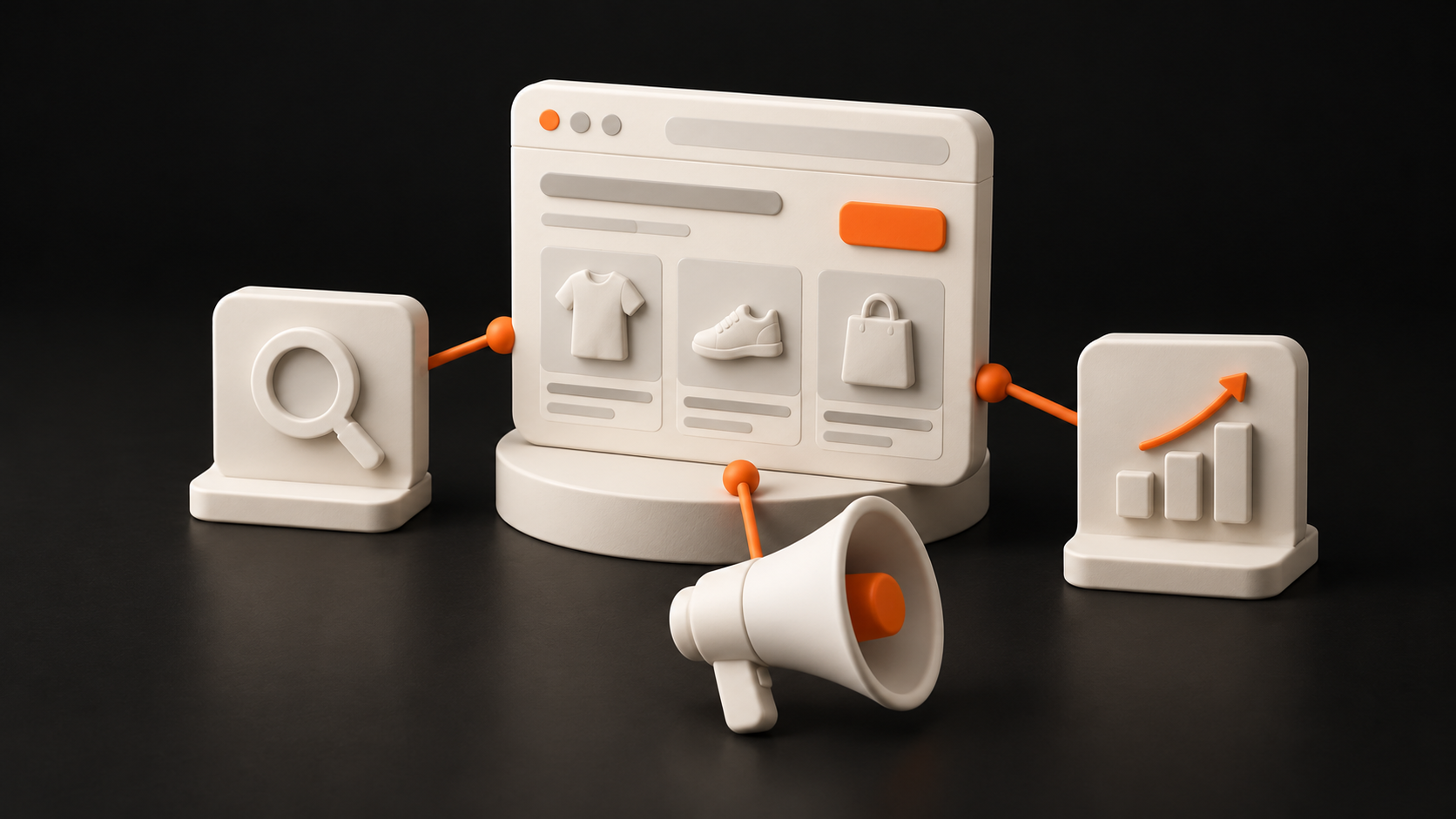
Want your online store to generate more revenue? Start with a plan that connects your product offer, the buying experience and customer acquisition. Here is what to consider together when building a new store or growing an existing one.
Czech shoppers spent almost CZK 92 billion online in the first half of 2026. According to Heureka Group, Czech e-commerce grew by 5.3% year on year, and the average order value reached CZK 1,889. For business owners, this is a sizeable market in which stores with different offers and marketing efforts compete for customers. Source: Heureka Group, 5 August 2026.
To win more customers for your store, you need to know what you offer them, how they will find you and why they should buy from you. Those answers should shape both the store and its marketing.
Czech online stores expect growth: the customer journey is changing too
The October GLS VIBE index found that 57% of survey participants expect revenue growth in 2027. Store owners plan to invest in marketing, AI, automation and technology. The survey covered 318 owners and managing directors, with more active retailers shipping larger volumes overrepresented. It captures their expectations, not a guaranteed outcome for the whole market. Source: GLS VIBE results reported by Marketing & Media, 19 October 2026.
The way people choose products is changing as well. According to a Shoptet survey presented at Reshoper, 31% of Czech online shoppers use AI before making a purchase. Measurable direct visits from AI currently account for around 0.3% of traffic to stores on the Shoptet platform; that measurement does not capture every way shoppers use AI. Source: MediaGuru, 20 October 2026.
Our practical takeaway for planning a store is this: your offer, search visibility and marketing should be planned together. Each affects the experience customers have with your business.
Start with the products you want to earn from
Before choosing a website template or an advertising budget, decide which products should drive the business forward. Consider their margins, availability, demand and your ability to fulfil orders.
A manufacturer with its own brand needs a different plan from a retailer selling products offered by dozens of competitors. The manufacturer may need to explain materials, production and the product story. The retailer may stand out through well chosen bundles, expert advice or reliable availability.
Write down in your project brief:
Which products and customer groups you want to develop first.
Why customers should choose your offer.
How many orders you can fulfil consistently.
What you can invest in launch and ongoing growth.
This gives you a basis for decisions about content, features and campaigns. A priority product range, for example, could get its own category, a detailed comparison of options and a dedicated campaign.
Three growth levers: visits, orders and average order value
You can roughly break online store revenue into three factors: the number of visits, the ratio of orders to visits and the average order value. Each calls for a different kind of work.
SEO and ads can bring relevant prospects to the store. A clear shopping experience helps them choose and complete an order. Useful bundles or complementary products can raise order value when they make sense for the customer.
The table below is an illustrative calculation, not a client result or a forecast for a particular store:
Metric for the same period | Model A | Model B |
|---|---|---|
Visits | 10,000 | 11,000 |
Orders per visit | 1% | 1.1% |
Orders | 100 | 121 |
Average order value | CZK 1,000 | CZK 1,100 |
Revenue | CZK 100,000 | CZK 133,100 |
In this model, each of the three inputs improves by 10% relative to its starting value. Multiplied together, they produce 33.1% higher revenue. Whether that growth would benefit a real business also depends on costs and margins. Actual changes must be checked against your own data.
That is why it pays to consider several routes to growth and decide where to invest first.
Four areas working toward one business goal
In a comprehensive project, each part can support the next:
Area | What it should give customers or the owner | What needs to be prepared |
|---|---|---|
Online store | Help people choose and complete a purchase | Category structure, product pages, mobile checkout and agreed integrations |
SEO and content | Help customers find the relevant offer in search | Topics, landing pages, useful copy and technical setup |
Paid advertising | Reach selected audiences with a specific offer | Campaigns, ad messages, landing pages and budget |
Measurement and growth | Show what brings orders and what to improve | Verified purchase tracking, cost analysis and next priorities |
Imagine a store selling garden lighting. Someone looking for terrace lighting finds a buying guide through search. From there, they visit the right category and compare products. An ad can also show a ready-made set to people already searching for one. Descriptions, availability and benefits should match at every step.
Discussing the marketing plan while the store is being designed helps identify the pages and materials you will need.
Discuss your online store and its marketing with NezHost
Plan SEO alongside categories and product pages
When building a new store, consider how people search for different types of products and how your site will help them choose. For an existing store, you can start by reviewing key categories and pages that already attract visitors.
In practice, this may mean reorganising your range, adding useful product attributes, comparing options or writing a guide for a specific use case. Each page should have a clear purpose and connect to what the store actually sells.
Google recommends sharing e-commerce product information through structured data on your website and Google Merchant Center. These help Google understand details such as price and availability and can make products eligible for different search appearances. Source: Google Search Central — product data.
For AI Overviews and AI Mode, Google says the usual SEO fundamentals still apply and there are no additional special requirements to participate. Inclusion in results is not guaranteed. Source: Google Search Central — AI features and your website.
Good product information therefore serves more than one purpose: it helps customers choose and gives search and advertising systems useful inputs.
Give each ad campaign a specific job and a matching page
For paid campaigns, decide exactly what they should support. That might be sales of a priority category, the launch of a new product range or a test of demand for a particular offer.
The ad should match what people see after clicking. If you promote a terrace lighting set, its landing page should show what is included, where it can be used, its price and its availability. Customers can then make a decision without searching for the basics again.
Plan the following together:
Which products and offers are worth promoting given their margins and availability.
Who they are for and how customers choose between them.
Where the ad leads and what visitors will find there.
How orders will be tracked and costs assessed.
Choose advertising channels based on your products, customers and budget. Use the results of individual offers to guide further investment.
Look at revenue and costs together
Higher sales are useful when the economics of the business still work. Alongside order value, track product costs, customer acquisition costs and the cost of fulfilling purchases. Discounts, cancellations, returns and shipping paid by the store can also change the outcome.
To decide what to do next, you need to know:
Which products and categories bring orders.
How results differ between traffic sources.
What it costs to acquire an order.
Where people leave the purchase process.
Google Analytics offers a purchase journey report from the visit and product view through the basket to the purchase. It requires correctly configured events. Source: Google Analytics Help — Purchase journey.
Compare analytics with the actual orders in your store administration. This gives you a basis for developing a successful category, changing an offer or adjusting a campaign.
What to include in a brief for a comprehensive online store
If you want the store to become a long-term sales channel, include the full process in your brief:
Business goals. Target customers, priority products, the strengths of your offer and budget.
Store creation or improvement. Content, design, mobile shopping, administration and necessary integrations.
Customer acquisition setup. SEO basics, product data, key landing pages and measurement.
Marketing after launch. Agreed campaigns, ongoing SEO, content and performance reviews.
Continued development. Specific improvements based on results and business needs.
Ask for the one-time build cost, ongoing work and ad spend paid to advertising platforms to be shown separately. Initial technical setup and long-term SEO involve different scopes of work. Any hosting or integration costs should also be agreed in advance.
That makes it clear what you will receive at launch, what happens regularly and who coordinates the different parts.
Let's discuss how your store can grow
NezHost builds online stores for small and medium-sized businesses and helps develop them after launch. We can bring store creation or improvements together with SEO, content, Google Ads and performance measurement. The exact scope depends on what you sell, where your store stands today and what you want to achieve.
For a new store, we can plan the offer, buying journey and marketing preparation together. For an existing store, we first discuss its current state and development options. What can be changed depends on the platform and the access available.
Send us a link to your store or tell us what you plan to sell. Include your goal and an approximate budget for the build and subsequent marketing. Together, we can define the next step and scope of work.
Discuss your online store's growth with NezHost
You can also read more about the store itself on our online store development page.