NezHost
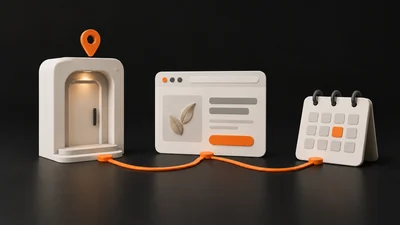
You are fitting out the premises, ordering equipment and planning your first services. At the same time, an Instagram account is taking shape, someone is designing a flyer and prospective clients are already getting in touch. A website helps when it brings these routes together: people can find the offer, the right location and a way to arrange a visit.
Do not wait for the final photograph of the finished salon before starting the website. First clarify the content and booking process. Your own photographs and the remaining details can then be added before publication.
First distinguish a new salon from an additional branch
If you are starting an independent business, the website also introduces you: who provides the treatments, what you offer and where you will work. For a concise service offer, one well-organised page may be enough.
For another branch of an existing salon, a dedicated location page is often more appropriate. The new premises may have different opening hours, staff or services. These differences should not be hidden in a note below the original location's contact details.
A separate new website is not automatically necessary. What matters is whether visitors can clearly identify which location they are choosing and where their appointment belongs. To help decide, read our comparison of one-page and larger salon websites.
Five answers for a first visit
Before the design starts, prepare short answers to these questions:
- What is the location called, and where exactly will it be?
- Which services will be available from opening day?
- Who will provide them?
- How can a visitor book or ask a question?
- From what date will you actually welcome clients?
Distinguish opening day from the date you start accepting bookings. If appointments can be arranged in advance, say so directly. If the premises are not ready yet, a contact form can collect enquiries with a clear explanation of what happens next.
On a new branch page, repeat its address near the booking information. Visitors may arrive directly on that page without seeing the homepage explanation of the different locations.
Photographs and directions
For a new salon, an initial set might include the owner's portrait, a few views of the premises and a photograph of the entrance. These help introduce the setting and make the right door easier to find on a first visit. A random stock photograph cannot show where to park or which doorbell to use.
If the salon is in a courtyard or upstairs, give simple directions. Add the building name or a genuinely useful landmark to the map. Describe step-free access, parking and public transport according to what you have verified.
You can collect photographs and contact details before the final design. This avoids having to reshape the website at the last minute around information that was not included in the original plan.
Naming a booking method is not enough
Choose a method you can manage from day one. It may be a phone call, a message or an existing booking service. Avoid adding several channels if nobody will check and answer some of them regularly.
For a booking link, test the correct location, available services and appointment confirmation. If clients book by phone, make the number clickable and explain when they can reach you or how to contact you while you are giving a treatment.
At Salon Eva Dostálová, we brought together a personal introduction, services, prices and photographs on one page, with appointments arranged by phone or SMS. Having a new website does not mean the business needs to introduce online booking.
What to align before promotion
Check the address, name, phone number and opening information on your website, Instagram and business profile. For another branch, make sure the booking link does not lead to the original location.
Your first promotion should link to a page that matches the message. If a post introduces a new pedicure service, visitors should find its description, price or pricing method, and contact details. After clicking, they should not still have to work out whether the service is available.
Advertising can be prepared alongside the website. Plan the launch around a complete offer and a working contact method. An ad click alone does not confirm an intention to visit.
A practical preparation sequence
First confirm the services, location and booking method. Then assemble the page content and choose a one-page website or a business website. Photographs, design and review follow. For the final test, ask someone unfamiliar with the location to use the site on a phone.
When briefing a new website, send the planned opening date, address, service list and an example of your booking or contact method. State which materials you already have. This makes it possible to plan a first version that supports the opening and identify what can be added later.
See how we build websites for beauty salons and aesthetic clinics.